🚨 PUTIN’S WARNING TO AMERICA SENDS SHOCKWAVES — UKRAINE COULD PUSH U.S.-RUSSIA TENSIONS INTO DANGEROUS NEW TERRITORY
A new warning from Moscow is once again putting Washington on edge.
As the war in Ukraine continues and the confrontation between Russia and the West remains dangerously unresolved, President Vladimir Putin has delivered another message aimed squarely at the United States and its allies.
The language is stark. The stakes are enormous. And behind the public statements lies a question that could have consequences far beyond the battlefield:
How far is Russia prepared to go if Washington continues supporting Ukraine?
The answer remains uncertain—but that uncertainty is exactly what makes the latest warning so unsettling.
🚨 MOSCOW SENDS A MESSAGE TO WASHINGTON
For years, the Ukraine war has evolved from a regional conflict into one of the most consequential confrontations between Russia and the United States since the Cold War.
Washington has provided Ukraine with extensive military, financial and diplomatic support, while Moscow has repeatedly warned that Western involvement is increasing the danger of a direct confrontation.
Putin has consistently portrayed American and NATO involvement as a threat to Russian security.
Now, every new weapons package, battlefield development or diplomatic decision is being watched through that lens.
The latest rhetoric from Moscow therefore carries more weight than an ordinary political statement.
It raises the possibility that the Kremlin could consider additional responses if it believes the United States is crossing what Russia considers a critical red line.
But there is an important distinction.
A warning is not the same thing as an announced military action.
At this stage, claims that Russia is preparing a specific attack against the United States would go beyond the evidence publicly established.
Still, the rhetoric itself is significant.
⚠️ WHY UKRAINE HAS BECOME THE CENTER OF THE CONFRONTATION
The conflict began as Russia’s full-scale invasion of Ukraine in February 2022, but its consequences have expanded dramatically.
The United States has treated Ukraine as a crucial test of European security and international rules against territorial conquest.
Russia sees the conflict very differently.
The Kremlin argues that NATO expansion and Western military cooperation with Ukraine created a fundamental security threat to Russia.
That clash of interpretations has created a dangerous cycle.
Washington increases support for Kyiv.
Moscow warns against further escalation.
Ukraine asks for additional weapons and assistance.
Russia responds with new threats or military pressure.
And the possibility of miscalculation remains.
This is why even a carefully worded statement from Moscow can produce an immediate reaction in Washington.
🔥 THE QUESTION EVERYONE IS ASKING
Could the Ukraine conflict eventually trigger a direct confrontation between Russia and the United States?
That is the nightmare scenario policymakers have tried to avoid.
Russia and the United States possess the world’s two largest nuclear arsenals. Neither government has an interest in allowing the Ukraine war to become a direct war between their armed forces.
Yet the risk of escalation cannot simply be dismissed.
Modern warfare involves long-range missiles, intelligence systems, drones, cyber operations and increasingly sophisticated military technology.
The battlefield is no longer isolated from the broader international security environment.
A decision made thousands of miles away can have consequences within hours.
That reality has made every new threat from Moscow—and every new commitment from Washington—far more consequential.
🇺🇸 WASHINGTON FACES A DIFFICULT CHOICE
For American policymakers, the dilemma is brutal.
If the United States reduces support for Ukraine, critics warn that Russia could gain a major strategic advantage.
If Washington increases military assistance, Moscow could interpret the move as another escalation.
There is no risk-free option.
American officials must simultaneously consider Ukraine’s survival, NATO security, the possibility of a wider European conflict and the danger of direct confrontation with a nuclear-armed Russia.
That balancing act has become one of the most difficult foreign-policy challenges facing Washington.
And Putin knows it.
🇷🇺 MOSCOW’S STRATEGY: WARNING OR DETERRENCE?
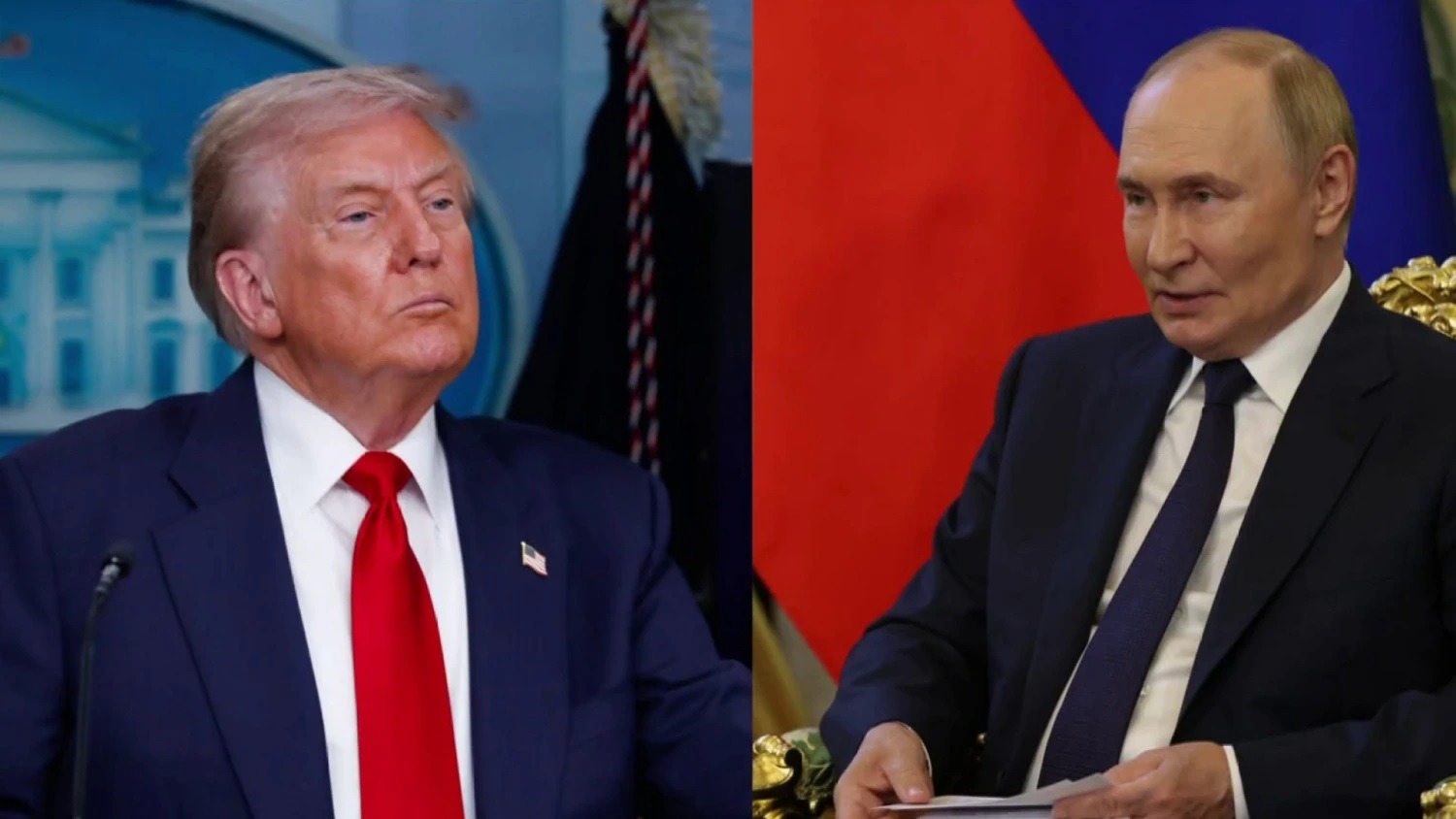
There is another possibility that cannot be ignored.
Russian warnings may be designed primarily to deter Western governments rather than announce an immediate offensive against them.
Threatening language can serve a strategic purpose.
By emphasizing the potential consequences of American involvement, Moscow can attempt to convince Washington and European governments to slow down, reconsider certain weapons transfers or avoid crossing specific thresholds.
In that sense, the rhetoric itself becomes part of the geopolitical battlefield.
Words are being used alongside missiles, sanctions and diplomacy.
The challenge for Western governments is determining which threats represent genuine intentions and which are designed primarily to influence political decision-making.
That distinction is extremely difficult to make from public statements alone.
🚨 THE “RED LINE” PROBLEM
One of the most dangerous features of the Ukraine conflict has been uncertainty over what Russia considers unacceptable.
Moscow has repeatedly warned against direct NATO involvement.
Western governments, meanwhile, have tried to provide Ukraine with enough assistance to defend itself without triggering a direct Russia-NATO war.
But the boundaries have continually shifted.
Weapons that once appeared too escalatory have eventually become part of Western military support.
Each change creates another question:
Where is the actual limit?
And perhaps even more importantly:
Does Washington know exactly where Moscow’s limit is?
If the answer is no, the risk of miscalculation becomes much harder to control.
💥 WHY THE MESSAGE IS RESONATING NOW
The latest warning comes at a moment when the international environment is already deeply unstable.
The war has lasted years.
Ukraine continues to depend heavily on Western assistance.
Russia remains committed to its military objectives.
European governments are increasing their focus on defense.
And Washington continues to debate how deeply the United States should remain involved.
That combination creates an unusually volatile environment.
A single battlefield development could change diplomatic calculations.
A new weapons system could trigger another Russian warning.
A mistake involving NATO personnel could create pressure for retaliation.
And a political decision in Washington could fundamentally alter the trajectory of the conflict.
This is why Putin’s rhetoric is receiving so much attention.
The issue is not simply what the Russian president said.
It is what his warning could mean if the confrontation continues to escalate.
👀 THE PART OF THE STORY THAT REMAINS UNKNOWN
Public statements can reveal intentions—but they cannot reveal everything happening behind closed doors.
Neither Washington nor Moscow publicly discloses every military calculation, intelligence assessment or diplomatic conversation.
That leaves analysts trying to interpret signals.
Is Russia attempting to frighten Washington into backing down?
Is Moscow preparing additional pressure on Ukraine?
Is the Kremlin responding to a specific American policy decision?
Or is this another attempt at strategic deterrence?
Without classified information, definitive answers are impossible.
And that uncertainty has become one of the most dangerous characteristics of the conflict.
⚠️ AMERICA’S NEXT MOVE COULD MATTER
The next major development may not come from Moscow.
It could come from Washington.
Every new decision involving Ukraine will be examined for what it signals about America’s long-term commitment.
Will the United States increase assistance?
Will it seek negotiations?
Will Washington establish new limits on military support?
Or will American policy shift dramatically?
Each possibility could produce a different reaction from Moscow.
That is why the Kremlin’s latest rhetoric cannot be viewed in isolation.
It is part of a much larger strategic confrontation involving Ukraine, Russia, the United States and NATO.
🌍 EUROPE IS WATCHING TOO
European governments have perhaps the most immediate interest in the outcome.
Ukraine’s battlefield position directly affects European security.
A prolonged conflict means continued military spending, refugee pressures and economic uncertainty.
A Russian victory could reshape Europe’s security architecture.
But a direct Russia-NATO conflict could be even more dangerous.
European leaders therefore face the same fundamental dilemma as Washington:
How do you help Ukraine without creating a much larger war?
There is no simple answer.
And every side is attempting to calculate the risks of the others.
🚨 THE BIGGER QUESTION: WHERE DOES THIS END?
After years of war, the most uncomfortable question remains unanswered.
What would an acceptable end to the conflict actually look like?
For Ukraine, territorial security and sovereignty remain central.
For Russia, the Kremlin continues to demand recognition of its security interests and territorial claims.
For the United States and its allies, the goal has included supporting Ukraine while preventing a wider war.
Those objectives remain deeply difficult to reconcile.
Until they are, warnings from Moscow will continue to attract attention.
And Washington will continue to face pressure over how far it should go.
🔥 THIS COULD BECOME A DEFINING MOMENT
Putin’s warning does not automatically mean that Russia is about to attack the United States.
There is no public evidence establishing that such an attack is imminent.
But dismissing the rhetoric entirely would also be a mistake.
The United States and Russia remain locked in a confrontation with enormous military and geopolitical consequences.
Every threat must be evaluated.
Every military decision carries potential consequences.
And every misunderstanding could become dangerous.
For Americans watching from thousands of miles away, the most important question may not be whether Putin is making a threat for headlines.
It may be whether Washington and Moscow can continue pushing against each other’s boundaries without eventually crossing one they cannot uncross.