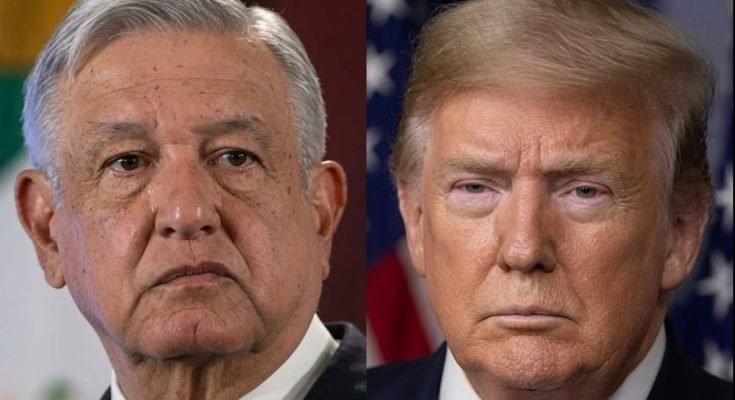
Few relationships in global politics are as complex, interconnected, and closely watched as the one between the United States and Mexico.
The two countries share a nearly 2,000-mile border, billions of dollars in annual trade, deep cultural ties, and ongoing cooperation on issues ranging from immigration to security. Yet despite this close connection, tensions periodically emerge when leaders on either side of the border make strong statements about national sovereignty and political authority.
Recently, headlines claiming that the Mexican president said Donald Trump would “never be able to do this” have attracted significant attention online. While different versions of the story circulate across social media and news platforms, the broader conversation centers on an issue that has shaped U.S.–Mexico relations for decades: the question of how much influence one nation can exert over the other.
At the heart of the discussion lies a fundamental principle that countries around the world fiercely protect—sovereignty.
Understanding Sovereignty
Sovereignty is one of the most important concepts in international relations.
Simply put, sovereignty means that a nation has the right to govern itself without outside interference.
Every sovereign nation controls:
- Its laws
- Its government
- Its territory
- Its internal affairs
- Its national institutions
Whether a country is large or small, wealthy or developing, sovereignty is considered a foundational principle of modern international law.